The DJI Mini 4 Pro promises to elevate your aerial photography game, especially in challenging lighting conditions. But does it truly possess night vision capabilities? As drone enthusiasts and professionals alike increasingly venture into low-light environments for stunning shots and unique perspectives, understanding the Mini 4 Pro’s low-light performance becomes essential. This guide dives deep into its features, helping you make the most out of your night-flying experiences. Whether you’re capturing twilight landscapes or nighttime events, mastering low-light settings can unlock new creative avenues. Explore how the Mini 4 Pro can enhance your nighttime adventures and ensure every flight is a success.
Understanding the DJI Mini 4 Pro’s Low Light Capabilities
When considering flying a drone in low-light conditions, the capabilities of the DJI Mini 4 Pro stand out due to its advanced features optimized for such environments. While the Mini 4 Pro does not include traditional night vision technology, its innovative camera system is designed to perform impressively in reduced lighting scenarios. This quadcopter features a 4K camera capable of shooting at 60 frames per second, which allows it to capture clearer and more detailed images than many of its predecessors, even as the sun sets or in twilight conditions.
The camera’s superior sensor enhances its performance in low-light scenarios by providing high dynamic range (HDR) capabilities. This means it can handle contrasting light conditions better than basic cameras, preserving detail in shadows while avoiding overexposed highlights. Consequently, pilots can achieve stunning visuals during the golden hour, where the soft light provides a unique visual appeal. The Mini 4 Pro also incorporates features such as an adjustable aperture, enabling users to fine-tune their camera settings for optimal exposure, even when flying at dusk or dawn.
It’s essential for operators to understand how to optimize their flight settings to make the most of the Mini 4 Pro’s low-light capabilities. Utilizing modes like D-Cinelike color profiles can assist in post-processing, giving images a more cinematic feel and greater depth. Pilots are encouraged to experiment with different settings and find what works best in the specific light conditions they encounter. Moreover, as the Mini 4 Pro is equipped with omnidirectional obstacle sensing, navigating through dimly lit areas is safer than ever, as the drone can detect and avoid obstacles effectively, further enhancing the flying experience.
In summary, while the DJI Mini 4 Pro does not come with traditional night vision, its camera technology and smart features allow for impressive low-light performance. By understanding and utilizing its capabilities, drone enthusiasts can capture exceptional aerial footage even as daylight fades, making it a versatile tool in any pilot’s kit.
Do Drones Need Night Vision for Low Light Flying?
Flying a drone in low light conditions can be a thrilling endeavor, but do drones really need night vision to operate effectively in these environments? While traditional night vision technology, often found in military applications, enhances visibility in complete darkness, most consumer drones-including the DJI Mini 4 Pro-have advanced camera systems specifically designed to handle low-light scenarios without this capability. Instead of relying on night vision, these drones utilize high-quality sensors and advanced imaging techniques that can capture detailed and vibrant photos and videos in diminished light.
Drones equipped with superior optics can significantly outperform basic cameras in low-light conditions. For instance, the Mini 4 Pro’s HDR capabilities allow it to balance light and shadow effectively, enhancing the overall image quality during dawn and dusk. Its adjustable aperture lets pilots control how much light enters the camera, which is crucial when dealing with varying lighting conditions. By optimizing these settings, drone operators can achieve stunning imagery that rivals what might typically be captured in brighter daylight.
That said, flying in lower light requires a solid understanding of your equipment’s capabilities. Operators may wish to familiarize themselves with various modes and settings, like the D-Cinelike color profile, which can help create a more dynamic visual narrative in post-production. Moreover, pilots should consider contextual factors such as weather and atmospheric conditions-fog and clouds can further dim light, affecting overall flying safety and camera performance.
In summary, while drones do not necessarily require night vision for low-light flying, they benefit from advanced photographic technologies that allow them to perform admirably even as natural light wanes. With the right understanding and settings, drone enthusiasts can confidently capture breathtaking nightscapes and utilize their gear to its fullest potential.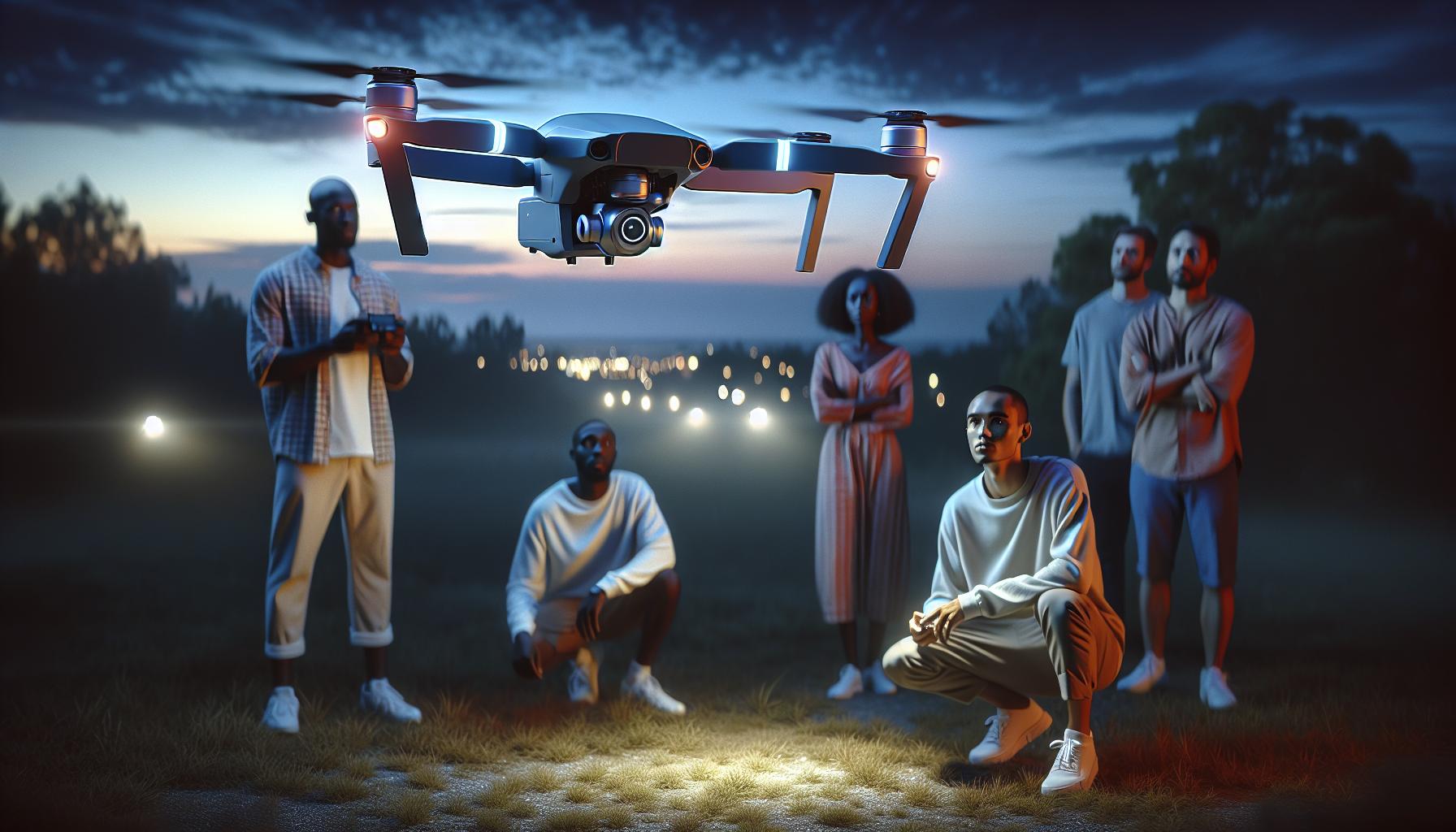
Comparing Night Vision Technologies for Drones
When considering low-light capabilities for aerial photography, understanding the various night vision technologies can greatly enhance one’s experience and results. Drones like the DJI Mini 4 Pro typically do not rely on traditional night vision technology, which uses infrared light to illuminate dark environments. Instead, they incorporate sophisticated sensors and camera systems that excel in low-light conditions, making them viable for capturing stunning aerial imagery even as daylight fades.
There are several types of night vision technologies utilized in drones:
1. Thermal Imaging
Thermal cameras detect infrared radiation emitted by objects, allowing for visibility in complete darkness. This technology is excellent for search and rescue missions or wildlife monitoring but can be costly and generally lacks the detailed imaging capabilities of traditional cameras. Because the Mini 4 Pro does not feature thermal imaging, pilots interested in this capability may want to explore other drone models designed specifically for such applications.
2. Low-Light Sensors
Many consumer drones, including the Mini 4 Pro, utilize advanced low-light sensors. These sensors enhance the drone’s ability to capture images and videos in reduced lighting. They achieve this through a combination of larger sensor sizes, higher ISO settings, and advanced noise reduction algorithms. This enables the Mini 4 Pro to maintain image clarity and detail, producing vibrant colors and sharp contrast even after sunset.
3. Low-Light Enhancement Software
Some drones come equipped with software algorithms designed to optimize image processing in low-light conditions. These algorithms can adjust settings dynamically, enhancing colors and details while reducing noise and blurriness. While the DJI Mini 4 Pro’s capabilities are primarily hardware-based, utilizing features like D-Cinelike color profiles during post-processing can yield dramatic effects.
4. HDR Imaging
High Dynamic Range (HDR) imaging is critical for capturing details in both highlights and shadows during twilight or nighttime shooting. The Mini 4 Pro excels in this regard, allowing operators to take multiple exposures and blend them for a well-balanced image. Pilots can leverage this feature to create captivating photos that showcase a broader palette of light and color, ideal for nighttime landscapes and urban environments.
To maximize low-light performance, drone pilots should consider the following tips:
- Experiment with manual settings, adjusting exposure and ISO to find the sweet spot for your desired outcome.
- Use stabilizing features to reduce blur when shooting at lower shutter speeds.
- Take advantage of HDR settings to capture a wider range of light.
- Familiarize yourself with post-editing tools to enhance night shots further.
By understanding these technologies, DJI Mini 4 Pro users can better navigate the challenges of low-light flying, ensuring they capture stunning visuals despite the absence of traditional night vision equipment. Knowing how to make the most of the Mini 4 Pro’s advanced features empowers pilots, encouraging creativity and exploration in their aerial photography endeavors.
Best Accessories for Low Light Drone Photography
When venturing into low-light drone photography, equipping your DJI Mini 4 Pro with the right accessories can significantly enhance your shooting capabilities and the quality of your images. Not only does the Mini 4 Pro excel in its low-light performance due to its advanced sensors, but using complementary accessories can push the boundaries of creativity and effectiveness in dark settings.
One key accessory is a ND filter (Neutral Density filter). By controlling the amount of light entering the lens, ND filters allow for longer exposure times without overexposing your images. This is particularly useful during twilight hours or in mixed lighting conditions, which can help create stunning HDR shots or smooth motion blur in night videos. ND filters come in various strengths, so selecting the right one based on the specific conditions is essential.
Another valuable addition is a stabilizer or gimbal that ensures smooth footage by compensating for camera shakes during low-light flights. While the Mini 4 Pro is already equipped with a built-in gimbal system, using additional stabilization can further reduce the effects of minor vibrations, yielding sharper images even in challenging light. Additionally, leveraging a mosquito net or lens hood can prevent lens flares caused by stray light sources, allowing you to capture brighter and more balanced images during night flights.
An often overlooked accessory is additional batteries and charging solutions. Low-light conditions often necessitate longer flight times to capture the desired shots, so having extra power on hand can make a significant difference. Consider investing in a multi-battery charging hub to quickly and efficiently prepare for extended sessions.
Lastly, utilizing a remote controller with a built-in screen provides better visibility of what you’re capturing in lower light conditions. This can help you adjust settings more easily and ensure that what you’re seeing aligns with the camera’s output, which is especially important when shooting in diminished light.
Incorporating these accessories not only maximizes the performance of your DJI Mini 4 Pro but also empowers you to navigate the intricacies of low-light drone photography with confidence and creativity. Whether capturing moonlit landscapes or urban nightscapes, these tools can help you achieve stunning results.
Real User Experiences: Mini 4 Pro in Night Conditions
Flying a DJI Mini 4 Pro under the cover of dusk reveals not just the beauty of the landscape bathed in moonlight, but also the impressive capabilities of this compact drone. Many users have reported capturing striking night images that rival those taken with much more expensive equipment. The combination of its capable camera sensors and advanced software algorithms allows for impressive responsiveness in low light, making it a popular choice for enthusiasts looking to explore the art of nighttime photography.
Real-world experiences abound, with pilots often showcasing breathtaking shots featuring cityscapes illuminated by streetlights or serene countryside scenes under starlit skies. One user shared how adjusting the ISO settings effectively managed noise, allowing for clearer images during nighttime flights. They noted, “I was amazed at how well the Mini 4 Pro handled low light. The key was to keep the ISO low and allow for longer exposure times, which really enhanced the final shots.” Such adjustments highlight the importance of understanding exposure settings to capture the best possible images after sunset.
However, challenges remain for pilots venturing out at night. Users have mentioned difficulties with orientation and depth perception due to limited available light, leading to a few near misses with trees and other obstacles. To combat this, many recommend practicing flights during twilight before fully committing to night flying. Additionally, utilizing the onboard lights can aid in visibility while also alerting others to the drone’s presence.
For those venturing out with their Mini 4 Pro equipped for the night, using mobile apps to pre-plan flight paths has proven beneficial. Employing features like waypoint navigation allows for more manageable and safer night flights. By setting predetermined paths, users can ensure they capture stunning views without the anxiety of navigating unfamiliar terrain in the dark. This level of preparation not only enhances confidence but also contributes to overall flight safety and success when capturing the beauty of night.
Tips for Capturing Stunning Night Shots with Your Drone
Even the most advanced drones can find low-light photography challenging, yet the DJI Mini 4 Pro proves to be an adept contender in this arena. Its advanced sensor technology, combined with thoughtful settings, allows pilots to capture stunning nighttime images that rival those taken with more expensive equipment. Here are some tips to optimize your night photography experience with the Mini 4 Pro.
Firstly, mastering your exposure settings is crucial. Start by using a low ISO setting to reduce noise in your images. Consider setting it between 100 and 400, which often yields the best results at night. To compensate for the low light, you’ll want to increase the exposure time. Use the shutter speed settings to allow for longer exposures, which will enable more light to hit the sensor. This could range from 2 to 15 seconds, depending on the available light and the stability of the drone. A tripod or stable surface is beneficial if you’re shooting from a stationary point or planning on using the drone in a hover mode for longer exposures.
Plan Your Flight Path
Pre-planning your flight path can significantly enhance the outcome of your nighttime shots. Use features like waypoint navigation available in the DJI Fly app to define specific locations and paths you want the drone to follow. This not only helps in avoiding obstacles but also ensures you capture the same stunning angles repeatedly. Managing your path allows you to focus on the photography rather than navigation, thereby reducing potential stress while flying in the dark.
Additionally, utilizing the Mini 4 Pro’s onboard lights responsibly can improve visibility during flights. Activating the drone’s lights not only assures your safety by alerting others to your presence but also aids in illuminating your surroundings. Be cautious not to fly directly into bright lights, which can overwhelm the camera sensor and result in overexposed images.
Finally, don’t underestimate the power of post-processing. Since night shots may require additional fine-tuning, employing software like Adobe Lightroom or Photoshop can help in correcting exposure, adjusting colors, and sharpening images. This final enhancement often transforms a good shot into an exceptional one.
By implementing these strategies, you’ll be well-equipped to capture beautiful, illuminating shots that showcase the world from a compelling perspective shortly after the sun sets.
Common Challenges When Flying Drones in Low Light
Flying a drone in low-light conditions can present several challenges that even seasoned pilots may struggle to navigate. The DJI Mini 4 Pro, while capable in twilight environments, isn’t immune to the unique issues faced when capturing the night sky. One major concern is limited visibility, which can make it difficult to track the drone’s position in the dark. As the natural light fades, pilots rely heavily on the drone’s lights and the live camera feed, both of which can sometimes fall short of providing a clear view of the surrounding area.
Another challenge is the risk of capturing motion blur due to extended exposure times required for night photography. While longer exposure settings can allow more light into the camera, they can also lead to undesirable effects if the drone isn’t perfectly stabilized. This is particularly true when wind conditions pick up or if the drone is not in a fixed position. To counteract this, pilots might consider using features like ActiveTrack to keep the drone stable or exploring manual gimbal options to enhance steadiness.
Environmental factors also play a significant role; things like nearby ambient light can drastically change how the drone’s camera perceives its surroundings. Bright streetlights or moonlight can create unwanted glare or refractions, impacting overall image quality. Pilots must be aware of their surroundings and adjust settings accordingly to mitigate these effects, learning to read the light conditions to optimize their results.
Additionally, maintaining battery life is crucial when flying at night, as colder temperatures can diminish battery performance. It’s recommended to always check the battery levels before launching and to consider doing a quick test run during the day to familiarize yourself with navigation routes and potential obstacles. Understanding these challenges and preparing for them can empower DJI Mini 4 Pro pilots to capture stunning low-light imagery effectively.
Understanding Exposure Settings for Night Photography
Mastering exposure settings is crucial for capturing stunning night photography with the DJI Mini 4 Pro. Unlike daylight shoots, where natural light aids in achieving the right balance, low-light environments require a keen understanding of how settings like ISO, shutter speed, and aperture can affect your results. One of the key aspects of low-light photography is the delicate interplay between these settings, which can enhance both the detail in your images and the overall night-time atmosphere.
When flying in low light, raising the ISO setting allows the camera to become more sensitive to light. For night photography, an ISO range between 800 to 3200 is generally a good starting point, but it’s important to monitor for noise, which can erode the quality of images. The Mini 4 Pro performs reasonably well at higher ISO levels, but you’ll want to test what works best under different conditions to find the sweet spot for your particular shooting needs.
Shutter speed is another critical factor; it determines how long the camera sensor is exposed to light. A slower shutter speed (e.g., 1/4 to 1 second) can capture more detail in darker conditions, but it can also lead to motion blur if there’s any movement of the drone or the subject. To combat this, utilize the drone’s built-in stabilization features or consider manual gimbal adjustments to keep your shots steady. Pairing longer exposures with a stable flight path allows you to capture beautiful, crisp nightscapes without compromising quality.
Lastly, remember that various light sources can significantly influence your images. For instance, utilizing the Mini 4 Pro’s HDR capabilities can help mitigate issues caused by bright light spots or glare from streetlights. Additionally, shoot in RAW format if available; this format preserves more detail, providing greater flexibility when post-processing your night photos to enhance shadows and highlights. By fine-tuning these exposure settings, you’ll be equipped to capture mesmerizing night imagery that showcases both the capabilities of the Mini 4 Pro and your photographic creativity.
Firmware Updates Impacting Night Vision Performance
Achieving optimal night vision performance with the DJI Mini 4 Pro is profoundly influenced by firmware updates. These updates not only enhance the drone’s operational capabilities but also fine-tune its sensor performance in low-light conditions. It’s crucial for pilots to regularly check for and install the latest firmware, as each version often brings adjustments that can improve image processing algorithms, low-light sensitivity, and overall flight stability.
When flying at night, the Mini 4 Pro relies on advanced software capabilities to enhance image clarity and color accuracy in challenging lighting situations. A recent firmware update may introduce enhanced noise reduction algorithms, allowing images taken at higher ISO settings to retain more detail with less grain. Additionally, updates can optimize the camera’s exposure settings, enabling better performance in various low-light environments, from urban landscapes with artificial lights to more remote areas with minimal light pollution.
To check for firmware updates, simply open the DJI Fly app and connect your Mini 4 Pro. Navigate to the settings menu where you can find the option to check for updates. Keeping your firmware up-to-date ensures that you benefit from the latest advancements and fixes, essential for capturing stunning night photography.
Lastly, consider participating in community forums or groups where drone enthusiasts share their experiences with specific firmware versions. Insights from real users can guide you on which updates yield the best night photography results, helping you make informed decisions and maximize your drone’s low-light performance. Regularly updating your firmware can be the strategic edge you need to capture breathtaking night shots with the Mini 4 Pro.
Legal Considerations for Night Flying with Drones
Flying drones at night offers unique opportunities for stunning aerial photography and videography, but it comes with significant legal considerations that every pilot must understand. Regulations governing night flights vary widely by country and region, but it is crucial for operators to familiarize themselves with the rules set forth by aviation authorities to ensure compliance and safety.
In the United States, for instance, the Federal Aviation Administration (FAA) permits night flying, but pilots must adhere to specific rules. Drones must be equipped with anti-collision lighting that is visible from three statute miles, and pilots must maintain visual line of sight with their aircraft at all times, even in low-light conditions. Additionally, it’s advisable to check local laws and regulations, as some states or municipalities may have stricter rules regarding night operations.
It’s also essential to consider privacy concerns and the potential for increased scrutiny from law enforcement when flying at night. When capturing images or video in populated areas, operators must be aware of trespassing laws and the right to privacy of individuals. Recording in residential areas may provoke complaints, leading to heightened attention from authorities. Therefore, pilots should prioritize responsible flying practices and respect others’ privacy during nighttime operations.
Furthermore, before embarking on a night flight, verify weather conditions as visibility can be more challenging at this time. Checking light pollution maps or using apps that provide night sky visibility can help determine the best locations for nighttime photography. Overall, being informed and abiding by the legal requirements can enhance the flying experience and ensure that drone operations remain safe and enjoyable.
Alternatives to Night Vision for Low Light Conditions
When shooting in low-light conditions, operators may find it challenging to capture clear and vibrant images without the aid of specialized night vision technology. However, there are several effective alternatives that can enhance the performance of drones like the DJI Mini 4 Pro during nighttime flights, even if they lack dedicated night vision capabilities.
To begin with, enhancing the drone’s camera settings is crucial. Adjusting the ISO sensitivity can significantly improve image clarity in dim environments. A higher ISO setting allows the camera to capture more light, though it may introduce some noise. Finding the right balance is key; typically, setting the ISO between 800 and 1600 works well without introducing excessive grain. Additionally, using longer exposure times can help gather more light, though this can also increase the risk of motion blur. It’s advisable to experiment with different settings before heading out for a night shoot.
Using external lighting can also dramatically improve the quality of your nighttime captures. LED spotlights or soft box lights can be mounted on the drone, illuminating the subject while avoiding intrusive shadows. This is especially beneficial for capturing subjects like landscapes or architecture in low light. However, it’s essential to ensure that any additional equipment does not exceed the drone’s weight limit, as this can affect flight stability and battery life.
Incorporating the use of post-processing software enables photographers to refine their low-light photos effectively. Software such as Adobe Lightroom and Photoshop can enhance brightness, contrast, and color balance, helping to transform darker images into vivid captures. For those capturing videos, utilizing software like DaVinci Resolve can enhance footage shot in low light by adjusting exposure and color grading, allowing for a more polished final product.
Finally, proper flight planning is essential. Understanding the ideal conditions for low-light flight-such as weather patterns and moon phases-can greatly affect the outcome of your images. Utilizing apps that provide information on light pollution and the best times to shoot can save time and significantly improve the quality of your captures.
By employing these strategies and alternatives, DJI Mini 4 Pro operators can achieve stunning visual results, effectively making the most out of low-light flying scenarios without necessitating advanced night vision technology.
Future Trends in Drone Night Vision Technology
The future of drone night vision technology is poised for remarkable advancements that will significantly enhance low-light photography and flying capabilities. As drone technology evolves, we can expect integrations of advanced imaging sensors, enhanced software algorithms, and improved hardware capabilities that allow for clearer and more detailed imagery during night flights.
One of the most exciting trends in this field is the integration of thermal imaging technology into consumer and professional drones. These sensors allow pilots to visualize heat signatures, making it possible to capture clear images and videos even in low-visibility conditions. This can be particularly useful for search and rescue operations, wildlife monitoring, and surveillance applications, providing critical situational awareness without the need for ambient light. As manufacturers like DJI refine these technologies, we may see them incorporated into more affordable models, potentially enhancing the capability of drones like the Mini 4 Pro.
Furthermore, the development of artificial intelligence (AI) algorithms for drone cameras is set to revolutionize how drones handle low-light situations. AI can analyze the surrounding environment in real-time, making automatic adjustments to settings such as ISO, aperture, and shutter speed to optimize image quality. This not only simplifies the process for users but also ensures that the captured footage is of the highest possible quality, even when light conditions are far from ideal.
In addition to hardware improvements, software solutions are also evolving. New applications and software platforms are being designed to enhance post-processing capabilities specific to night photography. These tools enable users to correct color balance, reduce noise, and enhance details in dark areas of images, resulting in stunning visual outcomes. As user-friendly software emerges alongside advanced drone features, both amateur and professional drone users will find it easier to achieve high-quality results in low-light conditions.
Overall, the combination of advanced sensor technologies, smart algorithms, and powerful post-processing software predicts a future where drones, including models like the DJI Mini 4 Pro, will excel in night vision capabilities, making the art of aerial photography more accessible and effective in a wider range of lighting conditions.
Q&A
Q: Does the DJI Mini 4 Pro have true night vision capabilities?
A: The DJI Mini 4 Pro does not feature true night vision capabilities, but it is designed to perform well in low light conditions. Using improved camera sensors and software, it enhances image quality in dusk or dawn situations, but it won’t provide the infrared vision seen in specialized night vision devices.
Q: What low light features enhance the DJI Mini 4 Pro’s performance?
A: The DJI Mini 4 Pro incorporates features such as enhanced ISO sensitivity, a larger aperture, and advanced image processing algorithms. These elements work together to optimize photos and video quality during low light situations, allowing for clearer captures.
Q: How can I improve night photography with the DJI Mini 4 Pro?
A: To enhance night photography, use a lower ISO setting to reduce noise and ensure longer exposure times. Additionally, utilize manual settings through the app to adjust shutter speed and aperture as needed. Also, consider using ND filters for better control over your shots.
Q: What settings should I adjust for low light flying with drones?
A: For low light flying with the DJI Mini 4 Pro, adjust the ISO levels to between 400-1600, lower the shutter speed to allow more light, and use manual exposure settings when available. This can significantly improve the clarity and detail in your night shots.
Q: Can I use the DJI Mini 4 Pro for nighttime videography?
A: Yes, the DJI Mini 4 Pro can be used for nighttime videography. When filming in low light, keep the frame rate slower or use a gimbal for stabilization to mitigate shakes, and adjust camera settings like ISO and shutter speed for optimal results.
Q: Are there any accessories that enhance night vision for the DJI Mini 4 Pro?
A: While the DJI Mini 4 Pro lacks night vision, accessories like ND filters can improve image quality during long exposures, and additional LED lights can illuminate the scene, enhancing your photography and videography capabilities in low light conditions.
Q: What are common challenges when flying the DJI Mini 4 Pro at night?
A: Common challenges include decreased visibility, difficulty in judging distances, and the potential for obstacles that may not be clearly visible. Pilots should be cautious and ensure they follow legal guidelines regarding night flying to maintain safety.
Q: How does firmware affect low light performance in the DJI Mini 4 Pro?
A: Firmware updates can enhance software processing for better low light performance. Ensuring your Mini 4 Pro is up to date with the latest firmware helps in optimizing camera settings and improving overall functionality for night flights.
For further insights on maximizing your DJI Mini 4 Pro’s low light capabilities, explore related sections in our comprehensive guide.
In Retrospect
In summary, while the DJI Mini 4 Pro excels in many areas, it does not feature dedicated night vision capabilities. However, its impressive low-light performance can still deliver breathtaking nighttime aerial shots. To enhance your skills further, explore our detailed guides on drone setup and gimbal calibration for optimal results in various lighting conditions. Don’t miss out on our tips for shooting in low light, which can significantly elevate your aerial photography game.
Ready to take your aerial adventures to the next level? Check out our comprehensive product page for the DJI Mini 4 Pro and discover exclusive offers! If you have any questions or experiences to share, leave a comment below – we love hearing from fellow drone enthusiasts! Make sure to subscribe to our newsletter for the latest updates and expert tips tailored just for you.