When flying drones, understanding how they measure altitude is crucial for safe and successful operation. DJI drones primarily use GPS and barometric sensors to determine elevation, which plays a vital role in planning flights and avoiding obstacles. GPS provides a broad view of positioning, while barometers offer precise height measurements based on atmospheric pressure. This dual approach not only enhances flight stability but also helps pilots gauge their altitude accurately, ensuring compliance with legal regulations and optimizing performance during aerial photography or surveying missions. As you explore how these technologies work together, you’ll gain insights that will enhance your flying experience and equip you with the knowledge to tackle altitude-related challenges confidently.
Understanding DJI Drones: An Overview of Altitude Measurement
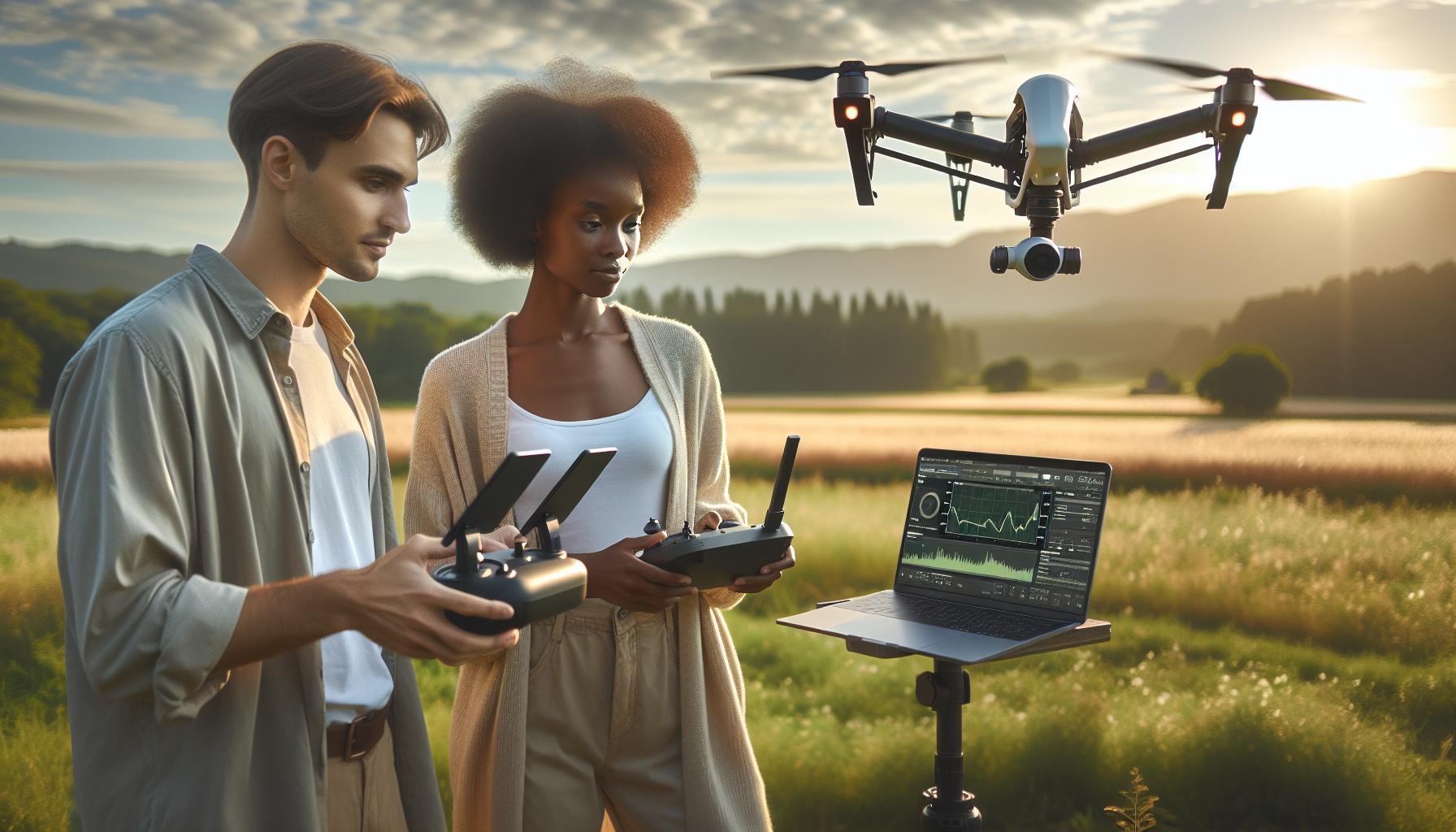
Understanding how altitude is measured in DJI drones is essential for both safety and effective operation in candid aerial photography and complex missions. DJI utilizes a combination of Global Positioning System (GPS) signals and barometric sensors to accurately determine a drone’s altitude. This dual-sensor approach allows for improved reliability, as each technology compensates for the limitations of the other.
GPS provides a rough estimate of elevation by triangulating signals from multiple satellites. It offers a straightforward means of determining the drone’s position in three-dimensional space, although its accuracy can fluctuate depending on satellite visibility and atmospheric conditions. In contrast, barometric sensors measure changes in air pressure, which correlates to altitude above sea level. These sensors typically deliver more precise altitude readings, especially at lower heights, making them indispensable for tasks requiring heightened accuracy-like drone surveying or mapping.
Together, these systems enable DJI drones to offer a comprehensive altitude measurement experience. For instance, when a drone ascends, the barometric sensor detects a drop in air pressure and calculates the new height based on standard atmospheric models. Meanwhile, GPS actively logs the drone’s geographic position. However, it’s important to know that environmental factors-such as weather variations and recent changes in air pressure-can impact the precision of these readings. Consequently, users are encouraged to understand how these sensors work collectively to optimize flight performance under diverse conditions.
The Role of GPS in DJI Drone Altitude Measurement
The integration of GPS technology in DJI drones provides a powerful tool for altitude measurement, combining convenience with a broad range of applications for both novice and experienced pilots. GPS, or Global Positioning System, is a satellite-based navigation system that allows drones to determine their position and altitude by triangulating signals from multiple satellites overhead. This capability is critical, particularly for tasks requiring advanced geographic awareness, such as aerial mapping, surveying, and precision agriculture.
While GPS is effective for establishing a general altitude and location, its limitations are worth noting. The accuracy of GPS readings can be affected by several factors, including atmospheric interference, the drone’s surroundings (such as tall buildings or dense forests), and the number of visible satellites. Typically, a minimum of four satellites is needed to provide a three-dimensional fix that includes altitude. Therefore, in situations where environmental conditions obstruct satellite signals, such as urban areas or regions with heavy cloud cover, the altitude measurements from GPS may become unreliable.
Additionally, GPS provides altitude readings based on mean sea level, which can sometimes lead to discrepancies in reading true height above ground level. For instance, when carrying out low-altitude flights near terrain, relying solely on GPS altitude may pose risks, as it may not accurately reflect elevation changes directly beneath the drone. To enhance operational safety and accuracy, many pilots find it advantageous to use GPS alongside barometric sensors, which offer precise measurements that complement GPS data and help correct any variances due to shifting conditions.
In practice, understanding how to interpret GPS data can significantly enhance a pilot’s ability to manage flights effectively. For example, when preparing for aerial photography or drone inspections, pilots can use GPS altitude data to set appropriate flight levels to meet regulatory guidelines or to achieve the desired framing for a shot. This dual approach not only enhances the safety of drone operations but also ensures that drones perform optimally in varied environments, enabling smoother flights even when faced with potential GPS limitations. By leveraging both GPS and barometric technology, pilots can trust their altitude readings more fully, leading to more precise and reliable drone operation.
How Barometric Sensors Elevate Altitude Accuracy
Integrating barometric sensors into DJI drones significantly enhances altitude accuracy, providing a reliable complement to GPS data. These sensors operate based on the principle that atmospheric pressure decreases as altitude increases. By measuring this pressure change, a barometric sensor can effectively deduce the drone’s height above ground level, offering higher precision in various flying conditions, particularly in environments where GPS signals may falter.
One of the key advantages of barometric sensors is their responsiveness to changes in altitude. They can quickly reflect real-time altitude variations, which is crucial during dynamic flight situations such as ascending or descending. This capability is particularly valuable for tasks requiring precise altitude maintenance, such as aerial photography or surveying. When flying at low altitudes, for instance, the barometric sensor provides a more accurate reflection of the drone’s elevation relative to the ground, unlike GPS, which can sometimes misrepresent height due to its reliance on mean sea level data.
Furthermore, in areas where GPS signals are weak or obstructed-such as dense urban environments or heavily wooded areas-barometric sensors can maintain reliable altitude data. This redundancy ensures that pilots can continue to operate their drones safely and effectively, even in challenging conditions. In practice, combining data from both GPS and barometric sensors allows for a more comprehensive understanding of altitude. DJI drones often utilize a fusion algorithm that merges these readings, enabling the pilot to benefit from the strengths of both systems while compensating for their individual weaknesses.
To maximize the effectiveness of barometric sensors, it’s essential for pilots to be aware of environmental factors that can influence readings. For example, rapid weather changes can lead to fluctuations in atmospheric pressure, potentially affecting altitude accuracy. Pilots can calibrate their sensors before each flight to ensure optimal performance, and they should monitor flight conditions to adapt their operations based on changing environments. By leveraging barometric technology, drone operators can elevate their flying experience, achieving greater altitude precision and reliability, ultimately enhancing their operational efficiency in the field.
Comparing GPS and Barometer for Height Data
In the realm of drone technology, precisely measuring altitude is pivotal for a range of applications, from aerial photography to surveying. DJI drones leverage two primary methods to gauge height: GPS and barometric sensors. Each system brings its strengths and limitations to the table, making it crucial for pilots to understand how they complement each other for optimal performance.
GPS relies on satellite signals to determine a drone’s location and altitude relative to sea level. This method offers broad coverage and works well in open areas free from obstructions. However, GPS can suffer from inaccuracies in environments with tall buildings or dense foliage, where signal reflection can lead to errors. Furthermore, because GPS indicates height relative to mean sea level, it may not provide precise readings for ground-level operations, thus potentially misrepresenting the drone’s true altitude during low flights or over uneven terrain.
In contrast, barometric sensors measure altitude based on atmospheric pressure, which decreases as altitude increases. This method is particularly effective in dynamic situations where quick changes in altitude occur, such as during takeoff or landing. Barometric readings can be more accurate at low altitudes and in areas where GPS might falter. However, environmental factors such as weather changes can affect atmospheric pressure and, consequently, height measurements. Pilots should calibrate their drones regularly to ensure barometric accuracy, especially before flights in varying weather conditions.
When combined, GPS and barometric sensors create a synergistic effect, leading to enhanced accuracy in altitude measurement. DJI’s sophisticated flight control algorithms integrate data from both systems, enabling the drone to maintain stable and precise altitude readings, even in challenging environments. This integrated approach is essential for tasks requiring meticulous altitude management, ensuring pilots can trust the data their drones provide. By understanding the nuances of these two measurement approaches, drone operators can make informed decisions about flight planning and operational strategies, ultimately enhancing their flying experiences.
Factors Affecting Altitude Readings in Drones
While the technological sophistication of DJI drones is impressive, various factors can influence the accuracy of altitude readings. Whether relying on GPS or barometric sensors, understanding these variables can help pilots optimize their flying experiences and achieve better results in both recreational and professional applications.
One primary element affecting altitude measurement is the environmental conditions in which the drone operates. For instance, dense urban areas with tall buildings can lead to GPS signal reflection, resulting in inaccurate altitude data due to multipath errors. This phenomenon occurs when GPS signals bounce off surfaces before reaching the receiver, causing discrepancies between the actual altitude and the reading transmitted to the drone’s systems. Conversely, barometric sensors are sensitive to sudden changes in atmospheric pressure, which may arise during weather fluctuations or abrupt altitude changes, affecting their reliability. Pilots should be aware of the local environment and choose flight paths that minimize potential disruptions to GPS connectivity.
Moreover, calibration and maintenance of sensors play a crucial role in ensuring accurate readings. DJI drones often require regular calibration of their barometric sensors, especially after significant temperature changes or prior to flights in varying weather conditions. Failing to calibrate can lead to drift in the altitude readings, causing the drone to underestimate or overestimate its height, particularly during crucial maneuvers like landing or ascending quickly. Pilots should also pay attention to firmware updates, which can improve sensor performance and address known issues.
Another factor to consider is the drone’s flight mode and the associated settings. Certain modes, such as altitude hold or GPS mode, rely heavily on the integration of GPS and barometric data. When switching modes, pilots should ensure that the drone has stabilized and that both systems are functioning properly to guarantee accurate altitude readings. Additionally, flying in windy conditions can affect the drone’s position and, subsequently, its altitude measurement. The drone’s altitude may appear to fluctuate as it compensates for wind, further complicating precise altitude tracking.
In summary, by comprehensively understanding these influencing factors, pilots can significantly improve their altitude measurement reliability. Taking proactive steps such as environment assessment, regular sensor calibration, and mode appropriateness will empower pilots to navigate the skies with confidence, ensuring their altitude readings are as precise as possible.
Real-World Applications: When to Trust GPS vs Barometer
In the world of drone operation, understanding when to rely on GPS versus barometric sensors can drastically enhance flight safety and performance. DJI drones utilize a sophisticated combination of both methods to gauge altitude, but environmental conditions and specific flight scenarios can dictate which technology should take precedence. For instance, flying in open, unobstructed areas typically allows for excellent GPS signal reception, providing reliable altitude readings aligned with ground levels. However, challenging environments, such as urban landscapes or heavily wooded regions, can lead to GPS interference, making adjustments necessary to ensure precise height data.
When to Trust GPS: GPS altitude data excel in scenarios where the drone is flying above ground level, particularly in high-altitude missions, such as surveying or aerial photography. It offers a broader view of the drone’s position relative to sea level, providing useful context for planning flight paths in varying geographical settings. As long as the GPS signals are stable, pilots can trust this data for maintaining safe distances from obstacles. Additionally, GPS is valuable during automated flight modes where predefined path adherence is crucial, giving pilots peace of mind that the drone will follow intended elevations.
When to Rely on Barometric Sensors: Conversely, barometric altimeters shine in situations requiring immediate and localized altitude adjustments, especially during takeoff and landing phases. Since barometers measure changes in air pressure, they provide quick feedback on immediate altitude changes, crucial in maintaining stability during critical maneuvers. Pilots flying in narrow canyons, for example, may find that barometric readings offer more reliable data when GPS signals are compromised, as pressure changes can be more consistent than erratic GPS spikes caused by signal loss or reflection.
Ultimately, it’s about integration and situational awareness. By recognizing the strengths of each system, drone pilots can adapt their flying strategies accordingly, ensuring that they make informed decisions about which data source to trust at any given moment. Balancing these two technologies significantly enhances the overall flying experience, allowing for smoother operations and adherence to safety protocols.
Troubleshooting Altitude Measurement Issues in DJI Drones
Altitude measurement issues can be one of the most perplexing challenges for drone pilots, especially when complications arise from either GPS inaccuracies or barometric sensor limitations. Understanding how these systems work together can help swiftly diagnose and rectify altitude-related errors. When encountering discrepancies in altitude readings, the first step is to assess your operational environment and the conditions which could be affecting performance.
Environmental Factors
Various environmental factors can disrupt both GPS and barometric readings. For instance, flying in urban areas with tall buildings can lead to GPS signal blockages, while heavy rainfall or changes in temperature can distort barometric pressure readings. In these scenarios:
- Check GPS Signal Strength: Open the DJI Fly App to see real-time GPS status. If the drone shows weak GPS signals (typically fewer than 5 satellites), consider relocating to a more open area to improve tracking.
- Monitor Weather Conditions: Adjust expectations based on current weather conditions. High winds, rain, or atmospheric pressure changes can affect your drone’s altitude maintenance abilities.
Calibration Techniques
Calibration is crucial for ensuring accurate altitude readings. DJI drones often come with built-in tools to help recalibrate sensors, which can be pivotal when shifting environments. Regular recalibration will not just improve altitude accuracy but also enhance overall flying stability. Here’s how to proceed:
- Barometer Calibration: Ensure your drone is on a flat, stable surface. Follow the app’s guidance to recalibrate the barometer. This is especially important if the drone has been subjected to significant altitudinal shifts.
- IMU Calibration: Performing an Inertial Measurement Unit (IMU) calibration can resolve many flight anomalies, including inconsistent altitude readings. Safe and accurate handling during this process is essential.
Troubleshooting Steps
If altitude measurement issues persist, implementing a systematic troubleshooting process can be beneficial:
- Review Firmware Updates: Regularly check for and apply any firmware updates, as these may contain fixes for known altitude-related issues.
- Restart the Drone and Controller: Sometimes, a simple power cycle can clear up temporary glitches affecting the altitude measurement systems.
- Inspect for Physical Damage: Examine drones for any signs of physical damage that might impact sensor accuracy, such as obstructions on the pressure sensor.
- Cross-Reference Data Points: Compare altitude data from the drone with that from GPS apps on a smartphone to assess possible discrepancies or errors in your readings.
Incorporating these strategies not only aids in resolving altitude measuring issues but also enhances your overall understanding of DJI drone operations. By actively engaging with both GPS and barometric systems, pilots can achieve more reliable and accurate altitude readings, ensuring safer and more effective drone flights.
Enhancing Altitude Accuracy: Tips for Drone Pilots
Achieving precise altitude readings is crucial for drone pilots, particularly in complex operational environments. DJI drones utilize both GPS and barometric sensors, each with distinct characteristics that influence altitude measurement. To enhance altitude accuracy, pilots should leverage the strengths of each system while mitigating their respective weaknesses.
Know Your Sensors
Understanding how both GPS and barometric sensors function is key. GPS provides altitude data based on satellite triangulation, making it effective for determining elevation over large distances, but it can be hindered by obstructions in urban settings. On the other hand, barometric sensors measure changes in air pressure to infer altitude, which can be affected by weather conditions and require calibration when moving to different elevations.
To optimize these sensors, consider the following:
- Regularly Check Signal Quality: Use the DJI Fly App to monitor the number of GPS satellites your drone is connected to. A minimum of seven satellites is ideal for reliable positioning.
- Perform Calibration Before Each Flight: Whether it’s barometric or IMU calibration, performing these checks ensures that the drone is accurately gauging altitude based on current environmental conditions.
Adapt to Environmental Conditions
Weather plays a significant role in altitude measurement accuracy. Pilots should be particularly vigilant in varying environments. For example, changes in temperature and humidity can impact barometric readings. If you’re piloting in forecasted bad weather, anticipate potential discrepancies in altitude data.
Strategies to improve accuracy include:
- Fly in Open Areas: Avoid densely built-up locations where GPS signals may be obstructed. Flying in open spaces improves satellite visibility and ensures more reliable GPS data.
- Monitor Weather Changes: Keep an eye on meteorological updates before and during your flight. Being aware of atmospheric pressure shifts can help you adjust your flying strategy accordingly.
By combining a solid understanding of your sensors with strategic planning around environmental conditions, you can significantly enhance the accuracy of altitude readings in DJI drones. This not only bolsters the overall flying experience but also ensures safer and more controlled flights, setting the foundation for successful aerial operations.
The Future of Altitude Measurement in Drone Technology
As drone technology evolves, the future of altitude measurement is poised for remarkable advancements, pushing beyond the reliance on traditional GPS and barometric sensors. New innovations aim to enhance the precision and reliability of altitude data, which is essential for various applications, from recreational flying to intricate surveying tasks.
One significant trend is the development of integrated sensor systems that combine multiple measurement techniques. Future drones could feature advanced altimetry methods, such as LiDAR (Light Detection and Ranging) and ultrasonic sensors, which provide real-time altitude measurements with higher accuracy in diverse environments. These technologies leverage light and sound waves, respectively, enabling drones to assess their height above the ground more effectively than traditional methods, particularly in areas where GPS signals may struggle.
Emerging Technologies and Applications
Beyond sensor integration, advancements in artificial intelligence and machine learning could dramatically improve altitude measurement. By analyzing vast datasets from previous flights, drones can learn patterns regarding local topography, weather conditions, and even other vehicles, adjusting their altitude readings dynamically to avoid obstacles or hazards. This adaptability not only enhances flight safety but also optimizes battery usage and extends flight time, providing significant benefits for both consumer and professional users.
Additionally, the potential for augmented reality (AR) in drone navigation is increasing. Imagine pilots being able to visualize altitude data directly in their view through smart glasses or AR interfaces, enhancing situational awareness. Such interfaces could overlay essential flight information in real-time, allowing for better decision-making, particularly in challenging environments.
Practical Considerations for Future Pilots
As these technologies come to fruition, drone pilots will need to adapt their skills and knowledge. Familiarity with new altitude measurement systems and their operation will be crucial. Pilots should stay informed about firmware updates and sensor capabilities introduced in new drone models.
Furthermore, regulatory authorities may adapt laws and guidelines around these emerging technologies to ensure safe integration into the airspace. Being ahead of the curve will not only enhance pilot competence but also open new avenues for drone utilization across various sectors, including agriculture, infrastructure inspection, and disaster response.
In summary, promises to harness cutting-edge technologies, significantly refining how pilots gauge their drones’ heights. As developments unfold, remaining engaged with these innovations will empower pilots to maximize safety and efficiency in their aerial endeavors.
User Experiences: GPS and Barometer Comparison Stories
User experiences comparing GPS and barometric altitude measurement in DJI drones reveal fascinating insights into the strengths and limitations of each technology. Many pilots have shared stories that highlight how these systems interact and often work in tandem to enhance flight safety and precision. One common narrative emphasizes the reliability of barometric sensors in maintaining altitude, even when flying in densely wooded areas or urban environments where GPS signals can be weak or obstructed. In these scenarios, the barometer provides stable readings based on atmospheric pressure changes, enabling the drone to fly consistently at the desired height.
Conversely, users frequently point out that GPS excels when it comes to achieving higher altitudes in open spaces, particularly when flying at great distances. Aerial photographers often rely on GPS data for precise positional awareness, especially when planning shots or filming panoramic views from altitudes of thousands of feet. However, many have experienced situations where GPS inaccuracies-often caused by satellite signal interference-led to unexpected altitude variances. For instance, a drone enthusiast recounted a flight where GPS altitude readings fluctuated significantly, prompting him to revert to the barometric altitude for a safer landing approach.
It’s also worth noting how pilots have learned to interpret the interplay between these systems. Several users recommend performing pre-flight checks to compare the readings from both the GPS and the barometer. Doing so provides a more comprehensive understanding of the drone’s altitude under dynamic conditions, enabling pilots to make informed decisions. Users advise maintaining mindfulness about environmental factors, such as weather changes that can affect atmospheric pressure and impact barometric readings, while also recognizing that quick adjustments in GPS link quality can influence altitude data during a flight.
In essence, understanding the nuances between GPS and barometric measurements empowers DJI drone operators to optimize their flying experience. By sharing these stories and best practices, the community enriches collective knowledge, fostering safer and more effective drone usage across varied environments.
Choosing the Right Drone with Optimal Altitude Features
Selecting a drone that accurately measures altitude is crucial for both safety and performance, particularly for pilots who engage in aerial photography, surveying, or drone racing. Different models come equipped with varying sensor technologies, primarily GPS and barometric altimeters, each offering distinct advantages depending on the intended use. Understanding these differences enables potential buyers to make informed decisions that align with their specific flying scenarios.
Understanding Sensor Technologies
When evaluating drones for altitude accuracy, it’s essential to consider the primary sensor technologies used. Most DJI drones rely on a combination of both GPS and barometric sensors to provide comprehensive altitude data.
- GPS offers a broad range of altitude readings and is particularly effective in open areas where satellite signals are strong. It excels at providing an overarching understanding of altitude in relation to sea level, which is beneficial for long-distance flights.
- Barometric sensors, on the other hand, use atmospheric pressure to gauge altitude above ground level. This technology is less susceptible to interference in urban landscapes or densely treed areas, where GPS signals might waver or drop out.
Recognizing the strengths and limitations of these technologies is critical. For instance, aerial photographers may benefit from drones with superior barometric sensors to maintain steady altitude in challenging environments, while those flying in open areas may prioritize GPS capabilities for accurate positioning over longer distances.
Points to Consider When Choosing a Drone
When it comes to picking a drone with optimal altitude features, here are some essential considerations:
- Intended Use: Consider what you will primarily use the drone for. Aerial photography and videography may require more consistent barometric readings, while long-range exploration might benefit from strong GPS functionality.
- Flight Environment: Assess the types of environments where you plan to fly. If your flights will often occur in areas with poor GPS signal, like urban settings or mountainous regions, prioritize drones with advanced barometric sensors.
- Altitude Limitations: Each drone model has its own altitude restrictions. Ensure the drone’s maximum operational altitude meets your expectations for your specific applications.
- Real-Time Data Display: Many advanced models now offer real-time altitude data that integrates both GPS and barometric readings. This feature allows pilots to monitor changes dynamically and make adjustments as needed.
Real-World Examples
Consider the DJI Mavic Air 2, which features robust GPS and barometric sensors delivering reliable data for a variety of flying scenarios. In contrast, the DJI Phantom 4, known for its excellent barometric performance, excels in urban settings where GPS may falter. User testimonials often highlight their preference for drones that seamlessly integrate both sensing technologies, as this dual capability can dramatically enhance the flying experience and maintain safety during complex maneuvers.
Investing time in understanding the altitude measurement capabilities of various DJI drone models ensures that you select a device that meets your specific needs, maximizing your flying efficiency and enjoyment.
Faq
Q: How accurate is GPS for measuring altitude in DJI drones?
A: GPS is generally less accurate in altitude measurement compared to barometers, with typical errors of 10 to 20 meters. While GPS provides a rough estimate of altitude, it is affected by satellite visibility and signal interference. For precise readings, especially in low-altitude scenarios, rely on barometric sensors.
Q: What is the role of barometers in altitude measurement for DJI drones?
A: Barometers offer high accuracy in altitude measurement by detecting air pressure changes as a drone ascends or descends. They can provide elevation data with accuracy levels within a few centimeters, which is crucial for stable flight and safe landings, especially at lower altitudes.
Q: When should I rely more on GPS than barometer for altitude data?
A: Rely on GPS for altitude data mainly during high altitude flights where barometers may underreport altitude due to pressure changes. GPS is also essential for long-distance navigation where pressure variations are minimal. For low-altitude precision tasks, barometric readings are preferred.
Q: How do weather conditions affect altitude readings in DJI drones?
A: Weather can significantly impact altitude readings. Changes in temperature and humidity can alter barometric pressure, leading to inaccurate altitude readings. Pilots should adjust their expectations and potentially recalibrate sensors based on prevailing weather conditions, particularly before critical flights.
Q: Can DJI drones measure altitude above sea level?
A: Yes, DJI drones can measure altitude above sea level using GPS data. However, the accuracy may vary based on satellite signal quality. For specific applications requiring elevation data above sea level, use a combination of GPS and barometric sensors for the most reliable output.
Q: What should I do if my DJI drone shows inconsistent altitude readings?
A: If your DJI drone displays inconsistent altitude readings, recalibrate the barometer by flying to a known height and resetting the data. Ensure GPS signals are strong and check for firmware updates that may improve sensor performance. Regular maintenance can prevent these issues.
Q: Is it possible to calibrate altitude sensors in DJI drones?
A: Yes, you can calibrate altitude sensors in DJI drones. This process usually involves setting the drone down at a known altitude, often performed during pre-flight checks. Access your drone’s settings through the app to execute calibration, ensuring accurate altitude measurements during flights.
Q: How do DJI drones use altitude data for safe flight operations?
A: DJI drones utilize altitude data to maintain safe flying levels, avoid obstacles, and ensure stable landings. The combination of GPS and barometric sensors enables drones to adjust their altitude autonomously, enhancing safety during various flight modes and in complex environments.
To Wrap It Up
Understanding how DJI drones measure altitude through GPS and barometric sensors is crucial for optimizing your flight experience. If you’re eager to enhance your skills, check out our guides on drone setup and advanced flying techniques to take your mastery to the next level. Don’t miss the chance to explore our article on the importance of accurate altitude readings for safe flying, ensuring every mission you embark on is a success.
Ready to elevate your drone knowledge? Subscribe to our newsletter for the latest tips, tools, and tutorials tailored for both beginners and seasoned pilots. Whether you’re looking to dive deeper into drone technology or seeking advice on the best accessories, we’ve got you covered. Stay engaged and empower your next flight-your DJI adventure awaits!