Navigating the skies with a drone can be thrilling, but it also comes with its share of challenges, especially when it comes to obstacle avoidance. Knowing which DJI Mini models possess effective obstacle avoidance capabilities is crucial for ensuring safety during flights, whether you’re a hobbyist capturing stunning visuals or a professional conducting inspections. The DJI Mini series offers a range of features designed to help pilots avoid collisions and enhance their flying experience. From the Mini 3 Pro’s advanced sensors to the newly released Mini 4, understanding these technologies can be the difference between a successful flight and a mishap. Join us as we explore each model, highlighting their obstacle avoidance features, so you can make an informed decision that aligns with your flying goals and enhances your skills.
Which DJI Mini Models Feature Obstacle Avoidance?
The latest DJI Mini models have been designed with advanced flying features, making them suitable for both beginners and experienced drone pilots. Notably, obstacle avoidance technology has become a critical component, enhancing safety during flights. Currently, the DJI Mini 3 and Mini 3 Pro are the standout models featuring sophisticated obstacle avoidance systems.
The Mini 3 Pro, in particular, comes equipped with forward, backward, and downward obstacle sensors, allowing it to detect and navigate around potential hazards. This multi-directional sensing capability significantly reduces the risk of collisions during flight, providing peace of mind when piloting in complex environments. The Mini 3, while also offering basic obstacle detection, lacks the same comprehensive suite of sensors but includes downward sensors to assist with landing safely.
The following table summarizes the features of obstacle avoidance in the different DJI Mini models:
| Model | Forward Sensors | Backward Sensors | Downward Sensors |
|---|---|---|---|
| DJI Mini 3 Pro | Yes | Yes | Yes |
| DJI Mini 3 | No | No | Yes |
When choosing a DJI Mini for obstacle avoidance, consider your flying environment. The comprehensive obstacle avoidance in the Mini 3 Pro makes it an excellent choice for complex landscapes, while the Mini 3 provides a more budget-friendly option with basic safety features suitable for simpler flying scenarios. This understanding of model capabilities can empower pilots to make informed decisions, ensuring a safer flight experience.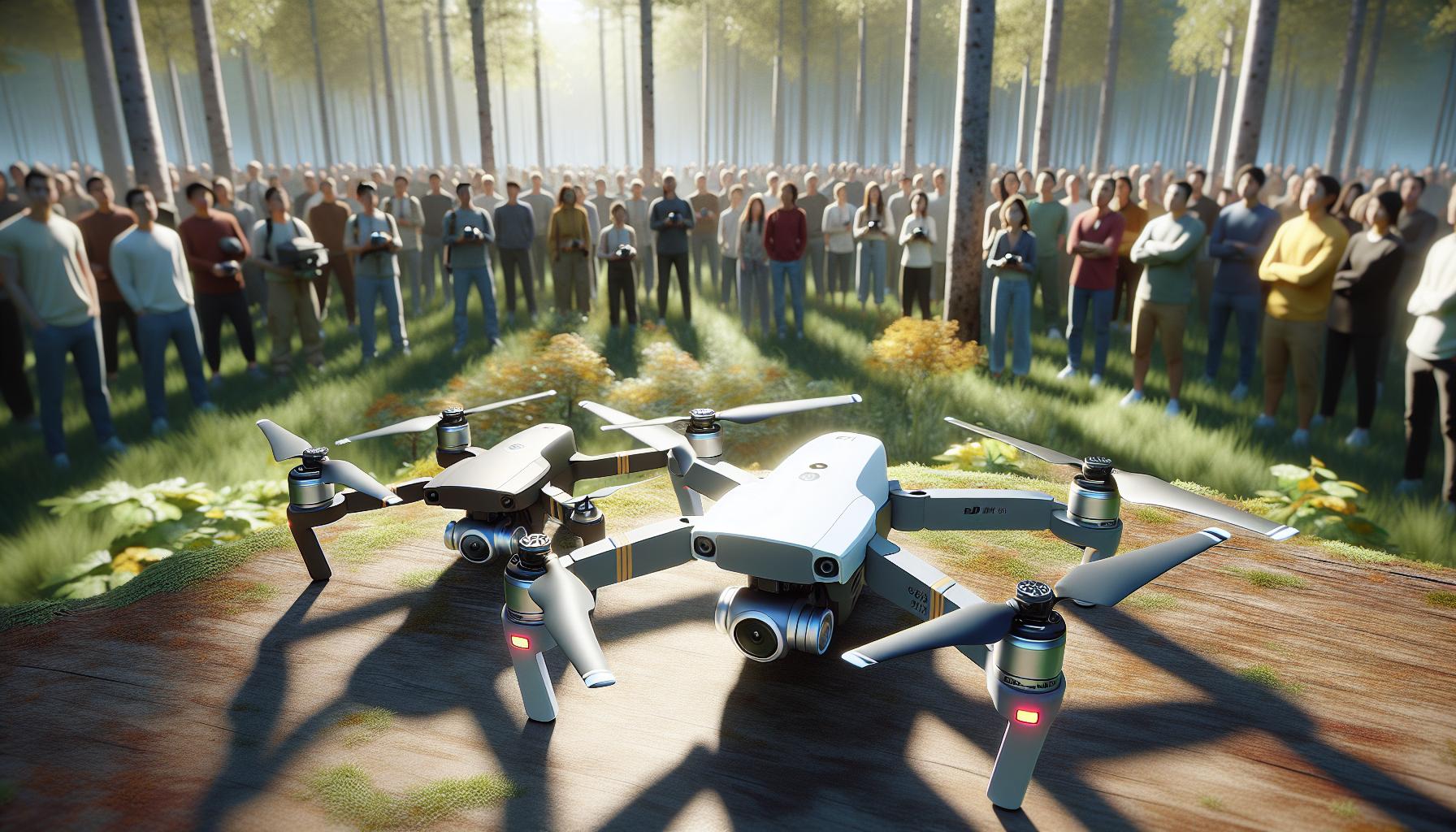
Understanding the Obstacle Avoidance Technology in Drones
The evolution of drone technology has significantly transformed how pilots interact with their flying machines, particularly through the integration of obstacle avoidance systems. These systems act as a second set of eyes for the drone, using a combination of sensors and software algorithms to detect and respond to obstacles in real-time. By employing multiple sensors located on various parts of the drone, such as forward, backward, and downward sensors, these systems ensure a more comprehensive awareness of one’s surroundings. This not only enhances the pilot’s confidence but also opens up new flying possibilities in complex or unfamiliar environments.
Understanding how obstacle avoidance works is crucial for optimizing its benefits. In most modern drones, including the DJI Mini series, this technology employs ultrasonic, infrared, or vision sensors to gauge distances to nearby objects. For instance, the DJI Mini 3 Pro utilizes visual sensors that can interpret depth and movement, allowing the drone to tactfully navigate around obstacles while executing pre-planned flight paths. When approaching an obstacle, the system can trigger predefined maneuvers, such as stopping in place, hovering, or changing direction, thereby minimizing the risk of collisions.
To maximize the effectiveness of obstacle avoidance, pilots should be mindful of several best practices. Regular updates on firmware ensure that the latest software improvements enhance obstacle detection capabilities. Flying at recommended altitudes helps the sensors gain clearer readings on obstacles, particularly in cluttered environments. Lastly, understanding the limitations of the system-such as potential lag in sensor response or effectiveness in low-light conditions-can prepare pilots for safe operation and decision-making while in the air.
Integrating obstacle avoidance technology into drone flights not only promotes safety but also enhances the overall flying experience. For both hobbyists and professionals, having a reliable understanding of these systems will lead to more confident piloting and ultimately better aerial outcomes.
Why Obstacle Avoidance is Crucial for Safe Flying
Flying a drone may seem straightforward, but one of the most significant risks faced by both novice and experienced pilots is the potential for collisions with obstacles. Obstacle avoidance technology has transformed safety protocols in drone operation, particularly among the DJI Mini models, which are now equipped with sophisticated sensors to detect and navigate around potential hazards. This essential feature acts as a safeguard, allowing pilots to focus on capturing stunning imagery rather than being at constant risk of damage or loss.
The importance of this technology cannot be overstated. Collisions can lead to not only the costly repair of drones but also injuries to people or damage to property. DJI’s integration of obstacle avoidance systems means that as soon as the drone approaches an object-be it a tree, building, or an unexpected bird-it can automatically assess the situation and choose the safest action. In practical scenarios, this can mean stopping abruptly to hover safely in place or executing evasive maneuvers without any input from the pilot. Such automated responses significantly reduce the risk of accidents, especially in complex or crowded environments.
Moreover, obstacle avoidance is vital for enhancing a pilot’s confidence while flying. Both beginners and seasoned operators can sometimes find themselves in situations where visibility is obstructed, such as flying in dense foliage or urban areas. The assurance that the drone will intelligently avoid hazards allows for a more relaxed flying experience and encourages operators to explore new and challenging environments. By leveraging these advanced systems, pilots can expand their aerial capabilities, leading to richer, more diverse video content and images.
To truly capitalize on the safety features offered by drones equipped with obstacle avoidance, it’s crucial for pilots to stay informed about the operational characteristics and limitations of these systems. Understanding how various environmental factors-like lighting conditions or the speed of flight-can affect the sensors’ performance is key. Consequently, educating oneself about the nuances of obstacle avoidance technology fosters smarter decision-making and equips pilots not only to navigate their drones safely but also to maximize their creative potential in the skies.
A Comparison of Obstacle Avoidance Capabilities in DJI Mini Models
The DJI Mini series has become a favorite among drone enthusiasts, thanks largely to its compact design and affordability, as well as its advanced technology, including obstacle avoidance capabilities. However, not all Mini models are created equal when it comes to this crucial safety feature. Understanding the differences in the obstacle avoidance systems across the Mini models is essential for any potential buyer or pilot looking to optimize their flying experience and ensure safety.
In the Mini range, the latest model, the DJI Mini 4 Pro, stands out with its advanced obstacle avoidance system, making it an excellent choice for both beginners and seasoned pilots. This model boasts sensors that can detect obstacles in all directions, significantly enhancing safety during flights. With its weight of under 250 grams, it’s also exempt from FAA registration, which adds to its appeal for hobbyists looking for a fun and safe way to capture aerial footage. Earlier models like the DJI Mini 2 do not feature obstacle avoidance, which means pilots must fly more cautiously and rely heavily on their manual piloting skills to navigate around potential hazards.
On the other hand, the DJI Mini 3 offers a balanced option, featuring some level of obstacle detection, but with limitations compared to the Mini 4 Pro. While it provides front and downward sensors, it lacks the comprehensive 360-degree sensing capabilities that help prevent collisions effectively in complex environments. This capability is particularly beneficial during outdoor adventures, where unpredictable obstacles can appear suddenly. As a pilot, understanding these differences can assist in making informed decisions about which model best suits your flying style and environment.
To effectively use the obstacle avoidance features across these models, it’s vital to comprehend not just how they operate, but also their limitations. For example, while the Mini 4 Pro can help avoid large obstacles like trees or buildings, it may struggle in scenarios with thin wires or other unforeseen dangers. Therefore, educating yourself on the operational capabilities and specific scenarios where the system excels or lacks will aid in maximizing the benefits of your drone’s obstacle avoidance system. With thoughtful consideration of your flying environment and the specific model’s features, you can ensure a safe, enjoyable experience in the skies.
Setting Up and Activating Obstacle Avoidance Features
To effectively make the most of your DJI Mini’s advanced obstacle avoidance features, a proper setup and activation process is essential. These systems rely on multiple sensors and software configurations, and understanding how to configure them can profoundly impact your flying experience and safety. It begins with ensuring that your drone’s firmware is up to date, as updates often include enhancements and bug fixes for the obstacle avoidance systems. You can perform a firmware check in the DJI Fly app under the “Settings” tab, where you will find options to update the drone’s software.
Once the firmware is updated, you can proceed with activating the obstacle avoidance features. Navigate to the “Control” settings within the DJI Fly app. Here, you will find the “Obstacle Avoidance” menu. You can enable or disable the obstacle detection features based on your flying preferences. It’s recommended for your first flights to keep these features activated. This can be particularly useful in unknown environments where obstacles may not be immediately visible.
In addition to sensor activation, familiarize yourself with the settings for “Advanced RTH” (Return-to-Home) and “APAS” (Advanced Pilot Assistance Systems), if available on your model. Enabling these options allows the drone to autonomously navigate around obstacles when returning home or during specific flight maneuvers, enhancing the safety of your flights. When flying, be aware of the drone’s sensing range; this will help you understand its limitations and make adjustments to your flying technique, ensuring safe navigation through various environments.
Remember to perform pre-flight checks regularly. Ensure the sensors are clean and free from obstructions, as dirt or debris can hinder their performance. Taking a few moments to check your drone before takeoff can save you from potentially hazardous situations during your flight. By mastering the setup and activation of obstacle avoidance features, you can enhance your flying experience and significantly reduce the risk of collisions, making your aerial adventures both enjoyable and safe.
Common Misconceptions About Obstacle Avoidance in Drones
The world of drone technology is replete with advancements that continually improve user experience and safety. However, despite these innovations, misconceptions about obstacle avoidance systems often cloud understanding and hinder effective use. One common belief is that obstacle avoidance guarantees crash-free flying. While these systems are sophisticated and significantly reduce the chance of collisions by detecting obstacles in the drone’s path, they are not infallible. Factors such as lighting conditions, sensor limitations, and fast-moving obstacles can affect the system’s responsiveness.
Another misconception pertains to the belief that all drones have the same obstacle avoidance capabilities. This is particularly relevant for DJI Mini models, where features vary. For instance, the DJI Mini 4 Pro includes advanced obstacle avoidance and even allows this feature in Sport Mode, while the Mini 3 model sacrifices some of these capabilities to offer a more budget-friendly option. Understanding the specific features of each model is crucial for users to utilize their drones safely and efficiently.
Many users also underestimate the importance of regular maintenance and calibration of obstacle avoidance systems. Obstructions on sensors, such as dirt or weather-related debris, can severely impact performance. A simple pre-flight check can go a long way in confirming that sensors are clean and functional, reinforcing the need for a proactive approach to drone maintenance.
Lastly, there’s a prevalent belief that once obstacle avoidance is activated, the pilot can completely rely on it without active monitoring. This notion can lead to complacency and potential accidents. Instead, pilots should view obstacle avoidance as a supplementary feature that enhances safety. It’s still vital to remain attentive and ready to intervene when necessary, ensuring a well-rounded approach to safe drone operation. By dispelling these misconceptions, drone operators can foster a safer and more enjoyable flying experience.
Tips for Maximizing Obstacle Avoidance Performance
To truly harness the power of obstacle avoidance technology in DJI Mini drones, a few deliberate practices can enhance your flying experience and ensure safe operation. One of the first steps is to always perform a pre-flight check. Before launching your drone, ensure that all sensors are clean and unobstructed. Dirt, dust, or water droplets can cloud the sensors, hindering their ability to detect obstacles effectively. A soft, dry cloth can easily wipe away any debris.
Understanding the environment in which you will be flying is also crucial. Avoid flying in conditions with sudden changes in lighting, as this can affect the sensors’ performance. Bright sunlight, shadows, or low-light areas may create blind spots that could lead to miscalculations in obstacle detection. If flying in diverse environments, consider practicing in open areas first to familiarize yourself with the drone’s response to obstacles.
When operating in crowded or densely packed areas, keep your drone’s speed manageable. High-speed maneuvers can outpace the drone’s obstacle avoidance systems, leading to potential collisions. Opt for slower speeds-especially in tight spaces-to give yourself more time to react. Furthermore, while the DJI Mini models come equipped with impressive obstacle avoidance features, use the ‘Active Track’ mode judiciously. This feature allows the drone to track subjects while avoiding obstacles, providing both versatility and safety as you focus on getting the perfect shot.
Lastly, ensuring your firmware is consistently updated is essential. DJI regularly releases updates that can enhance obstacle avoidance algorithms and sensor performance. By keeping your drone’s software current, you maximize its capability to safely navigate complex environments. By incorporating these strategies into your flying routine, you can enhance the effectiveness of your DJI Mini’s obstacle avoidance features and ensure more enjoyable and secure flights.
Troubleshooting Obstacle Avoidance Issues in DJI Mini Drones
Flying a DJI Mini drone can be an exhilarating experience, but to fully enjoy its capabilities, particularly the obstacle avoidance feature, it’s crucial to address any issues that may arise. If you encounter any unforeseen problems with the obstacle avoidance system, here are some practical steps to troubleshoot effectively and ensure smooth operation during your flights.
First, check the sensors. Obstacle avoidance relies heavily on the accuracy of the onboard sensors. Dirt, dust, or even moisture can obstruct these sensors, leading to misinterpretations of the environment. Before every flight, inspect and clean the sensors with a soft, dry cloth. Ensure there are no obstructions that could hinder their functionality. You might also unscrew any protective gimbal cover that could block the sensors’ view.
Next, verify your drone’s settings. Sometimes, obstacle avoidance can be inadvertently disabled or altered in the settings. Using the DJI app, navigate to the flight settings and ensure that the obstacle avoidance mode is activated. You may also want to check if you are in a flight mode that supports obstacle avoidance, as some modes, like “Sport Mode,” may limit or deactivate these features for higher speed and agility.
Another common problem is poor performance in specific environments. Lighting conditions can significantly affect sensor capabilities. If flying in areas with extreme light contrasts-such as bright sunlight or deep shadows-you may notice reduced sensitivity. Avoid flying in these conditions, or take it to an open area with uniform lighting for troubleshooting. If the drone misdetects obstacles, perform a test flight in a controlled environment to evaluate sensor performance under clearer conditions.
Lastly, update your firmware regularly. Firmware updates can enhance obstacle avoidance algorithms and improve overall drone performance. Regularly check for updates using the DJI Fly app and follow prompts for installation. If you suspect a software-related issue, a factory reset may also help restore the default sensor settings.
By following these troubleshooting steps, you can quickly identify and resolve obstacle avoidance issues in your DJI Mini drone. Keeping your sensors clean, verifying settings, monitoring environmental conditions, and staying up-to-date with firmware are key practices to ensure your drone operates safely and effectively. Happy flying!
Flying Safely: Guidelines for Obstacle Avoidance in Different Environments
Flying a drone, especially in complex environments, can sometimes feel like navigating a moving maze. With the advancement of obstacle avoidance technology, DJI Mini drones enhance flying safety by detecting potential hazards in their flight path, but these features are most effective when used with an understanding of various environmental factors.
When flying in urban areas, the abundance of obstacles-from tall buildings to power lines-requires extra caution. Always fly at a safe altitude to give your drone sufficient space to adjust its flight path in response to detected obstacles. Additionally, be mindful of how the drone’s sensors perceive your surroundings. For instance, if you’re operating in narrow alleys or close to structures, ensure that you frequently use the screen and the drone’s first-person view (FPV) to manually pilot the drone as needed, rather than relying solely on automated avoidance functions.
In natural settings, such as forests or mountainous regions, the challenge of sparse signals and hidden obstacles emerges. Trees, uneven terrain, and varying elevations can trick your Mini’s sensors into underperforming. It’s advisable to fly during clearer weather conditions when foliage is less dense. Moreover, keeping the drone in sight allows for manual piloting when necessary. Utilizing the “Return to Home” feature can also assist the drone in retracing back through comfortably navigable routes if you find yourself in a tight spot.
Tips for Specific Environments
- Urban Areas: Maintain a higher altitude and engage in manual piloting in complex situations.
- Rural Regions: Be aware that open fields might lack significant obstacles but watch for sudden terrain changes.
- Indoor Spaces: Fly slowly and ensure that sensor functions are turned on; utilize manual controls heavily.
- Coastal Areas: Be mindful of wind and altitude, as sudden gusts can affect stability and sensor effectiveness.
In summary, while the obstacle avoidance features in DJI Mini models significantly enhance flight safety, combining these technologies with a thorough understanding of the environmental conditions will ensure a smooth flying experience. Always prioritize situational awareness and preparedness for varied terrains, as this will ultimately allow you to make the most of your DJI drone’s capabilities while keeping safety at the forefront.
Accessories to Enhance Obstacle Avoidance and Safety
To elevate the safety and efficiency of your DJI Mini drone, several accessories can significantly enhance obstacle avoidance capabilities. Investing in the right tools can provide not only added protection but also improve your overall flying experience, especially in complex environments.
One invaluable accessory is the propeller guard. This lightweight shield protects the drone’s propellers from minor collisions, which can occur unexpectedly during flight. While not directly linked to obstacle avoidance, they act as a physical buffer, allowing the drone to bounce off small obstacles without sustaining damage. They are particularly useful for beginners or when flying in tight spaces.
Another essential add-on is the luggage mount or landing pad. These platforms create a dedicated area for takeoff and landing, ensuring that the drone is grounded on a stable, visible surface. This reduces the risk of detecting uneven terrain or small obstacles during these critical phases of flight, ultimately supporting the drone’s automated features and reducing the likelihood of mishaps before airborne.
For operators looking for enhanced functionality, advanced camera filters can also play a role. Using ND filters helps reduce glare and improves the camera’s image quality, which can indirectly aid in better obstacle recognition. By capturing clearer visuals, the drone’s sensors have a more accurate representation of its environment, providing more reliable data for obstacle avoidance systems.
Lastly, incorporating a GPS-based telemetry device enhances navigation precision. These devices provide real-time positioning data and can assist in maintaining a safe altitude and distance from detected obstacles. This helps the drone navigate complex environments more intelligently, ensuring safer flight paths.
By integrating these accessories into your flying routine, you’ll not only enhance the obstacle avoidance functions of your DJI Mini but also foster a more enjoyable and secure flying experience.
User Reviews: Real-World Experiences with DJI Mini Obstacle Avoidance
User experiences with the DJI Mini series and its obstacle avoidance capabilities provide invaluable insights into how these advanced features operate in real-world scenarios. Many users appreciate the seamless integration of obstacle avoidance technology, especially in the DJI Mini 4 Pro, which has garnered praise for its ability to navigate tricky environments while maintaining stability during flight. Users frequently highlight that this model effectively detects and avoids larger obstacles, providing a sense of security even when flying in densely populated areas or rugged landscapes.
The feedback from hobbyists often emphasizes the learning curve associated with understanding the limits of obstacle avoidance systems. While many report positive experiences, some have encountered situations where the sensors struggled with thin wires or small branches. One user shared that they had to adjust their flying techniques to account for these limitations, realizing that while the drone can autonomously navigate around larger objects, it may need human intervention in areas with finer obstacles. This combination of technology and pilot awareness reflects the importance of mastering both the drone’s capabilities and potential shortcomings.
In contrast, professional operators utilizing the Mavic 3 Enterprise for industrial inspections have reported outstanding reliability in obstacle detection. They appreciate its robust performance, particularly in scenarios involving overhead power lines. Users have noted that the Mavic 3 Enterprise consistently outperformed expectations during tests, successfully recognizing and avoiding thicker wires, which is critical for ensuring safety during inspections and surveys. This strong track record reinforces the notion that investing in models with advanced obstacle avoidance features can significantly enhance operational efficiency and safety.
To maximize the effectiveness of the obstacle avoidance system, users recommend regular firmware updates and recalibrating the sensors to ensure optimal performance. Additionally, taking the time to understand and test these features in a controlled environment before engaging in more complex flights can lead to a smoother flying experience. By equipping oneself with knowledge and adapting flying habits, pilots can significantly improve their safety and effectiveness while utilizing DJI Mini drones equipped with obstacle avoidance technology.
Future of Obstacle Avoidance Technology in DJI Drones
As drone technology evolves, the future of obstacle avoidance promises to redefine how pilots interact with unmanned aerial vehicles. Recent advancements in sensors, artificial intelligence, and real-time processing capabilities signal a significant leap toward more intuitive and reliable navigation systems. For instance, the integration of advanced visual recognition systems is set to enhance the ability of drones to identify and respond to both static and dynamic obstacles, empowering pilots to explore complex environments with greater confidence.
The Role of AI in Future Obstacle Avoidance
One of the most exciting areas of development is the use of artificial intelligence in obstacle detection and avoidance. As AI algorithms continue to improve, drones will not only be able to react to obstacles but also predict potential hazards based on their flight path and environmental conditions. This predictive capability will enable a level of autonomous maneuvering previously thought impossible, allowing drones to navigate around obstacles without requiring constant input from operators. For example, future models may analyze flight terrains and adjust their routes in real time to avoid both foreseen and unforeseen obstacles, significantly enhancing safety.
Adaptive Systems and Learning Algorithms
Another cutting-edge trend in obstacle avoidance technology is the implementation of adaptive systems that grow more sophisticated through experience. These systems will learn from previous flights, adjusting their parameters to improve obstacle detection in different terrains and conditions. As they gather data, drones will become increasingly adept at flying in both known environments, like urban settings, and unpredictable ones, such as forests or industrial sites. This could be particularly beneficial for commercial operators, enabling safer and more efficient operations in complex landscapes.
Future Drone Models and Enhanced Safety Features
Looking ahead, we can anticipate the introduction of new models that incorporate these advanced safety features, building upon the foundations set by current offerings like the DJI Mini 4 Pro. As manufacturers refine their obstacle avoidance systems, users can expect drones equipped with more robust detection capabilities-potentially including multi-directional sensing that monitors surroundings beyond the forward direction. This enhanced awareness will help mitigate risks associated with flying in crowded urban areas or over various terrains.
In summary, the seems bright, promising substantial improvements in safety and user experience. By embracing these innovations, both hobbyists and professionals will be better equipped to navigate the skies, whether they are capturing stunning aerial footage or performing critical industrial inspections. As these systems evolve, the balance between advanced technology and pilot intuitiveness will mark a new era in drone operation, showcasing a commitment to both innovation and safety.
Frequently Asked Questions
Q: Which DJI Mini models have obstacle avoidance technology?
A: The DJI Mini 2 and Mini 3 Pro feature advanced obstacle avoidance technology. The Mini 2 includes basic downward sensors, while the Mini 3 Pro has forward, backward, and downward sensors, allowing for enhanced collision detection and safe navigation. Learn more in the section on DJI Mini Models Feature Obstacle Avoidance.
Q: How does obstacle avoidance work in DJI Mini drones?
A: Obstacle avoidance in DJI Mini drones utilizes sensors to detect surrounding objects. When an obstacle is detected, the drone automatically adjusts its flight path to prevent collisions, ensuring safer flying experiences. For detailed insight, refer to the Understanding the Obstacle Avoidance Technology section.
Q: Why is obstacle avoidance important for drone flying?
A: Obstacle avoidance is crucial for preventing crashes and ensuring safe flights, especially in urban environments or areas with complex structures. This technology helps maintain the drone’s stability during autonomous flights, enhancing overall user experience. More information is in the Why Obstacle Avoidance is Crucial for Safe Flying section.
Q: Can I disable obstacle avoidance on DJI Mini drones?
A: Yes, obstacle avoidance can typically be disabled through the DJI app settings. However, it’s advisable to keep it enabled for safety reasons, especially when flying in unknown environments. For setup guidance, see the Setting Up and Activating Obstacle Avoidance Features section.
Q: What should I do if my DJI Mini’s obstacle avoidance isn’t working?
A: If obstacle avoidance isn’t functioning, ensure the sensors are clean and the firmware is updated. You may also need to recalibrate the drone. Detailed troubleshooting steps can be found in the Troubleshooting Obstacle Avoidance Issues in DJI Mini Drones section.
Q: Are there specific environments where obstacle avoidance is less effective?
A: Yes, obstacle avoidance may be less effective in low-light conditions or areas with highly reflective or transparent surfaces that confuse the sensors. Refer to Flying Safely: Guidelines for Obstacle Avoidance in Different Environments for more tips.
Q: How can I enhance the obstacle avoidance capabilities of my DJI Mini?
A: To enhance obstacle avoidance, keep the drone firmware updated, maintain clear sensor surfaces, and fly in well-lit conditions. Consider using additional accessories like propeller guards for increased safety. Check the Accessories to Enhance Obstacle Avoidance and Safety section for recommendations.
Q: What real-world experiences do users report about DJI Mini obstacle avoidance?
A: Users generally report positive experiences with DJI Mini’s obstacle avoidance features, noting that the technology significantly reduces the risk of crashes. However, many emphasize the importance of staying aware of their surroundings. Find more user insights in the User Reviews: Real-World Experiences with DJI Mini Obstacle Avoidance section.
Concluding Remarks
Now that you’re equipped with the insights on which DJI Mini models feature obstacle avoidance, it’s time to take your aerial adventures to new heights! Remember, the right drone not only enhances your flying experience but also ensures safety. Whether you’re a beginner or a seasoned pilot, investing in a model like the DJI Mini 4 Pro can significantly elevate your capabilities while keeping mishaps at bay.
Want to learn more about maximizing your drone’s potential? Check out our guides on best practices for drone flying and advanced features in DJI Mavic drones. Don’t forget to subscribe to our newsletter for exclusive tips and the latest updates on drone technology!
Take action today-explore our comprehensive reviews, and empower yourself with the knowledge that makes you a responsible and skilled drone pilot. Your next flight awaits!